Partial discharge detection
Partial Discharge is only supported by the Si2a-PD model.
Introduction
When an electric component begins to fail, one of the first indicators is sound. The sound is caused by partial discharges that signal the harmful flow of electricity and degrade components over time. The camera detects partial discharges based on the sound they emit.
By filtering out the background noise and focusing on the high and ultrasonic frequencies, where the sound of partial discharges typically is much stronger, the camera can determine if the sound source is likely to be a partial discharge.
When a potential partial discharge is detected, the camera will display a Phase-Resolved Partial Discharge pattern, or PRPD, at the monitored area in the configurator tool.
When a snapshot is taken of a potential partial discharge, the camera will performs detailed analysis and provide information regarding the probable type of partial discharge, the severity of the fault, and recommended actions.
The accuracy of the camera’s severity assessment relies on the Distance, Voltage, and Component parameters in each monitored area determined by the operator.
For more accurate results, it is also recommended to specify the environmental temperature and relative humidity in the configurator tool settings.
Partial discharge parameters
When analyzing partial discharges, the camera uses information about the distance, voltage, and type of component. The more exact you specify these parameters, the more precise the severity assessment will be.
Distance
Information about the distance, from the camera to the sound source, is used by the camera to adjust for the natural decrease in sound intensity as distance increases.
Distance can be set when creating monitoring areas, as well as via the edit button on already created areas.
Results overview
The camera configurator tool displays the following at each monitored region.
Sound Pressure Level (SPL) is a measure of the strength of a sound.
PRPD pattern of a detected partial discharge.
Type of Partial discharge.
Partial discharge severity level.
To create monitored regions, see section Alarm events.
The absolute SPL reading depends on the selected filter. To ensure that the results are comparable across different filters, the camera displays a normalized SPL value, that matches what the result would be with a measurement bandwidth of 20 kHz.
Partial discharge analysis results
The following images illustrate the results generated by the camera configurator tool after completing a partial discharge analysis. See section Alarm events.
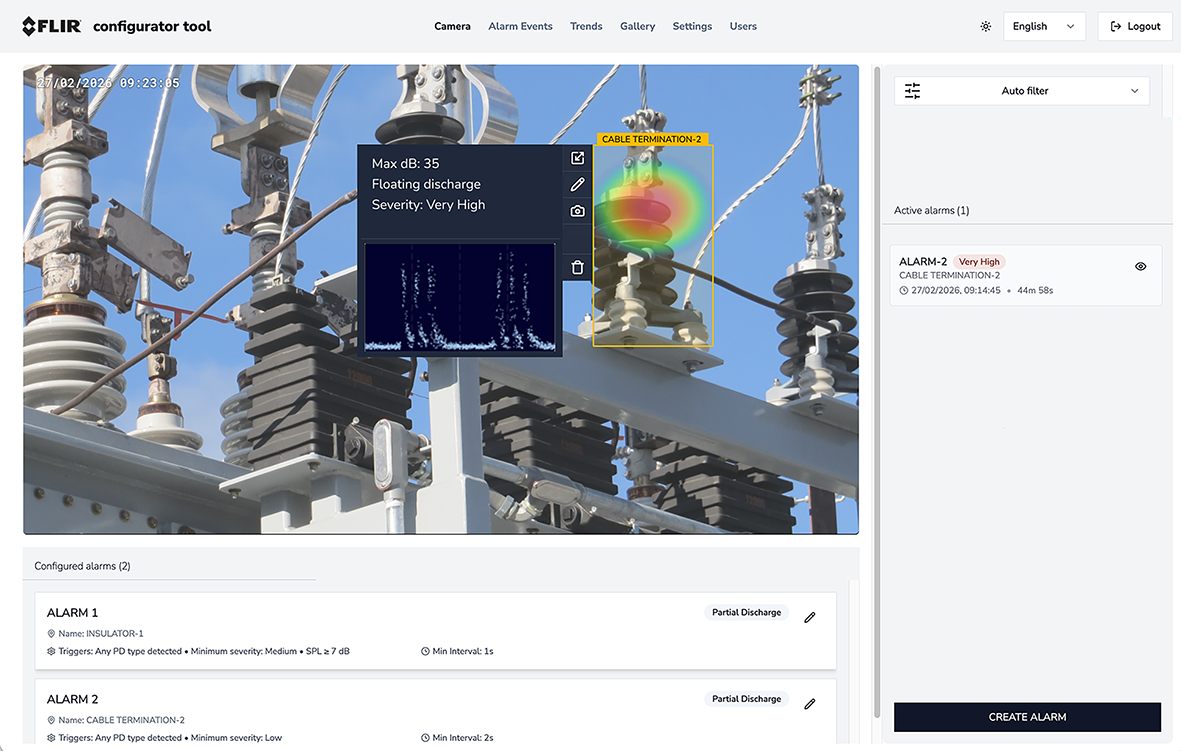
Figure 1. Live PD analytics.
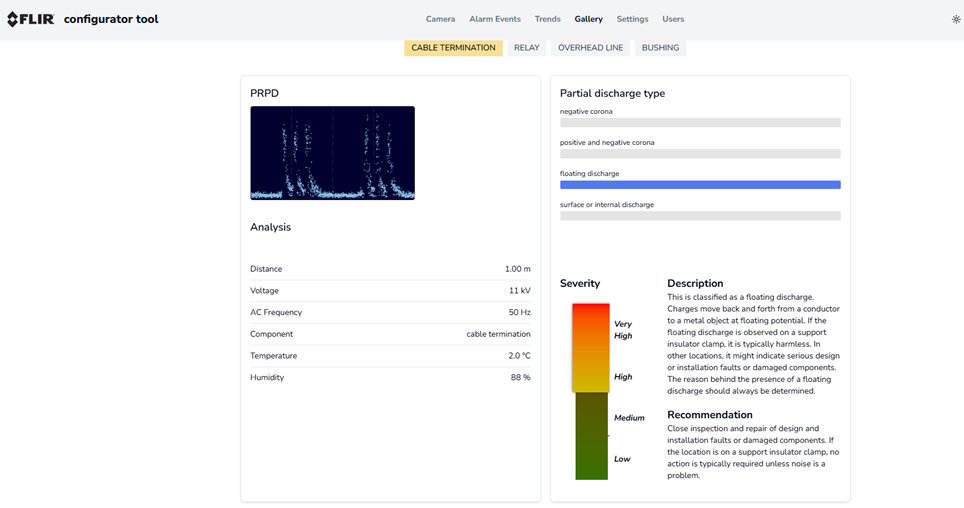
Figure 2. PD detailed analysis result of the snapshot.
PRPD pattern
The Phase-Resolved Partial Discharge (PRPD) pattern is a widely used tool for analysis and diagnosis of partial discharge activity. Partial discharge activity occurs due to defects in electrical components. Each dot in the PRPD pattern corresponds to an event caused by a discharging defect. There are several different types of partial discharges. Each type typically has a distinct PRPD pattern.
Partial discharge types
Negative corona.
Positive and negative corona.
Floating discharge.
Surface or internal discharge.
The length of the blue color bar reflects the system’s confidence in identifying a specific type of detected partial discharge. If multiple color bars have nearly identical lengths, it indicates uncertainty about the exact type.
Severity assessment
The severity bar indicates the estimated severity of the detected partial discharge.
The assessed severity is also shown as text. The Description describes the type of partial discharge, while the Recommendation provides suggestions for the actions to be taken.
The severity assessment only provides general guidelines based on the likely type of partial discharge and the data available. Always consult an expert to decide on the actions that need, or do not need, to be taken when a partial discharge has been detected.
The more exact the distance, voltage, and type of component parameters are specified, the more precise the severity assessment will typically be.